

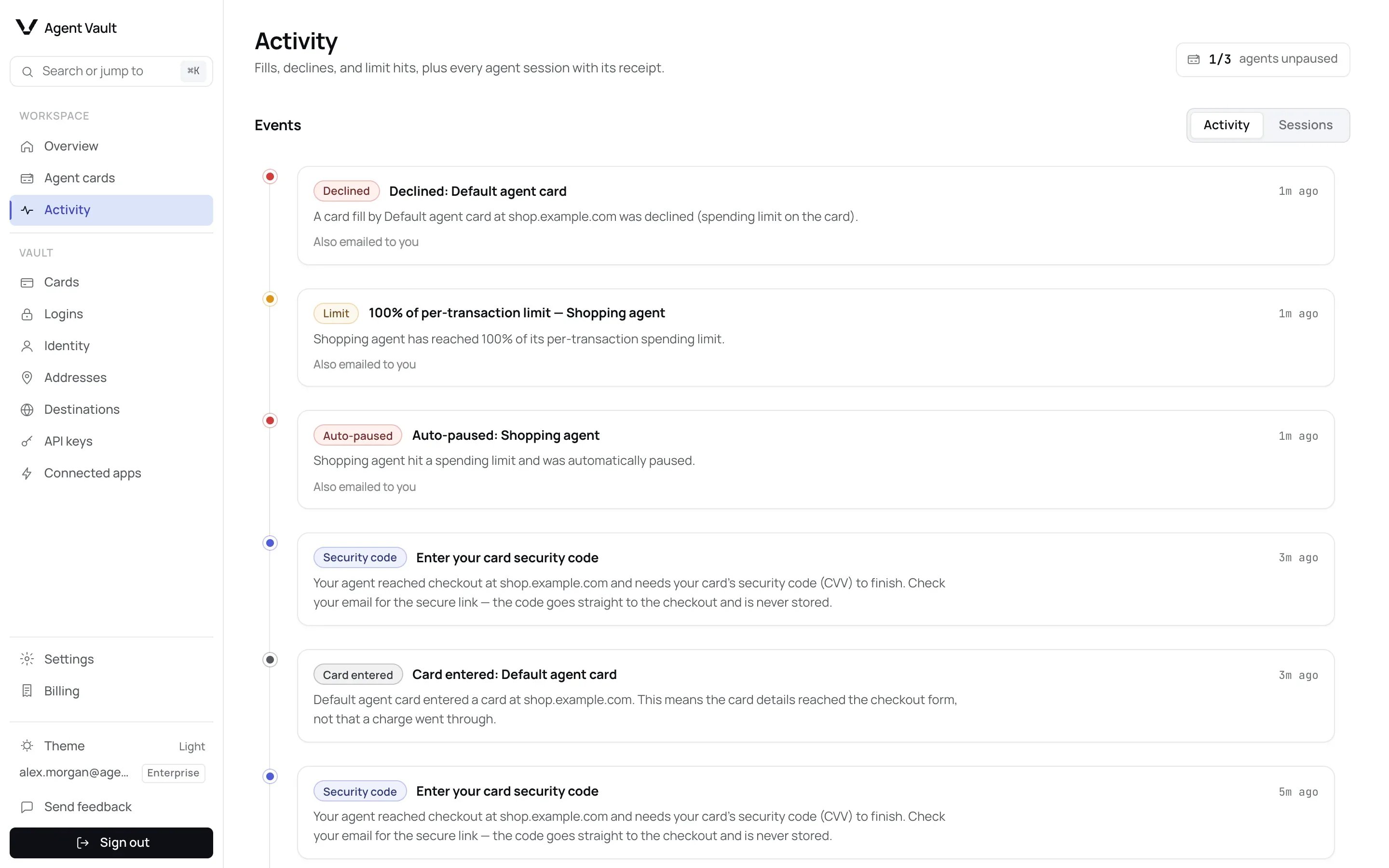
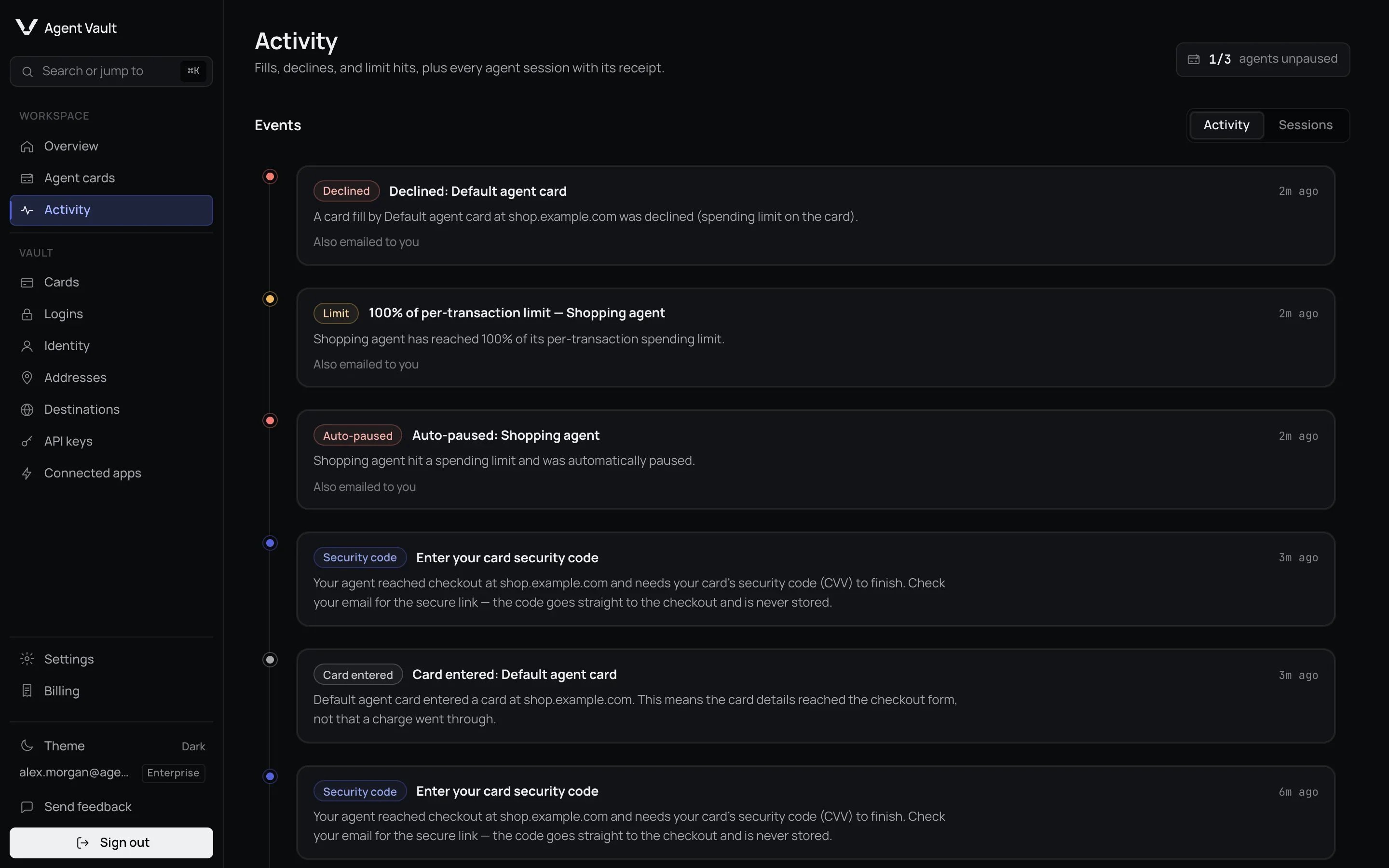
The Activity tab's event feed.
The Activity tab
Each event has a label. The common ones:
You may also see Auto-paused (an agent card paused itself after a limit),
Traffic warning (a session’s traffic did not use your own connection) and
Residential exit (which residential connection a session went out through).
Under
each event, a line says whether it was Also emailed to you, Email queued
or Email could not be delivered.
Residential exit
Where Agent Vault sends a session out through a residential connection instead of your own, the session ends with one Residential exit row, titled Residential exit used. It is a record, shown in a neutral colour, not a warning. It says:- The country the exit was in, which is where sites saw the session come from.
- How much the session carried, sent and received.
- How many checkouts from the isolated environment that handles your card went out the same way, when there were any.
- Whether the provider stopped carrying the session before it ended.
Find and open a session
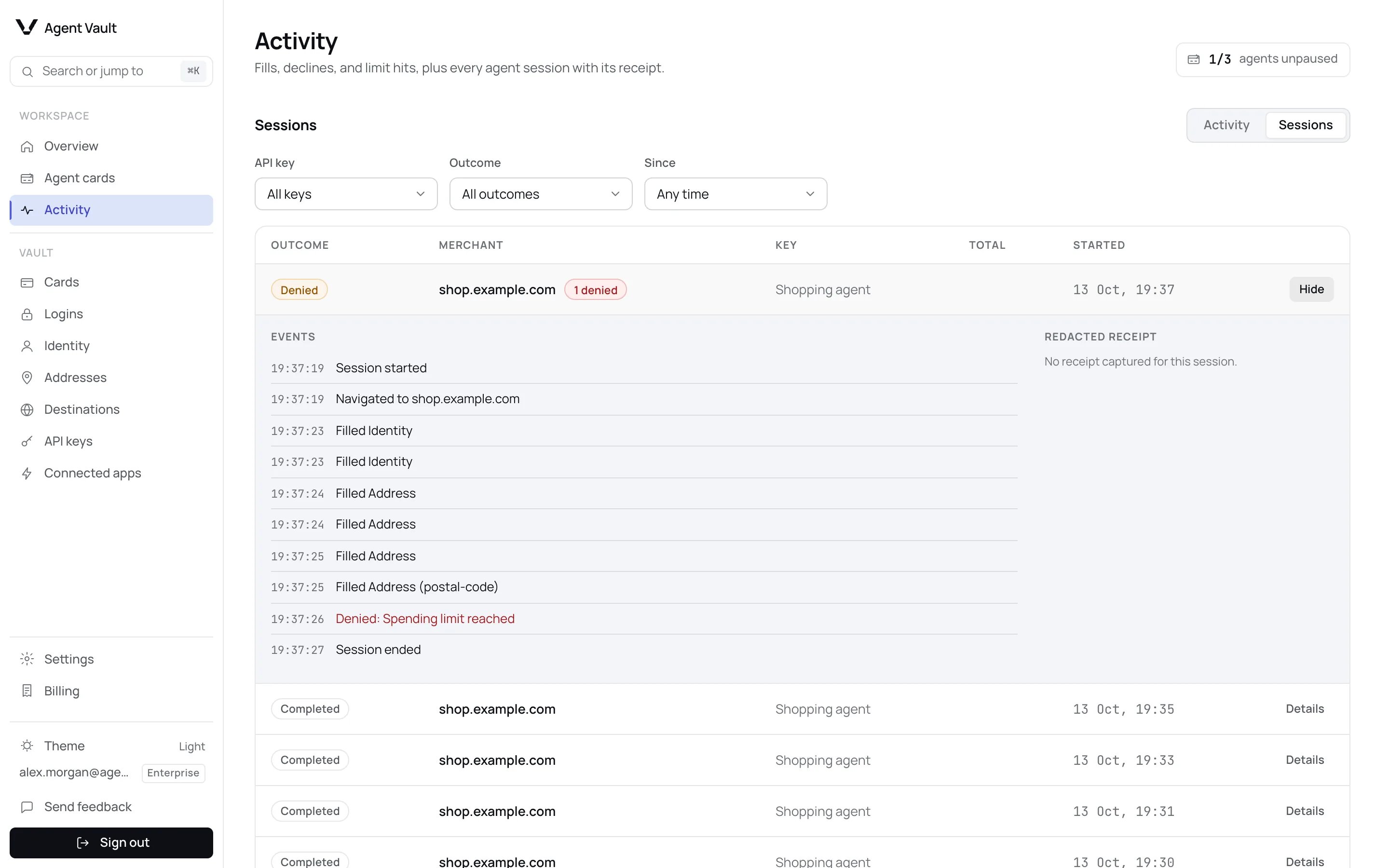
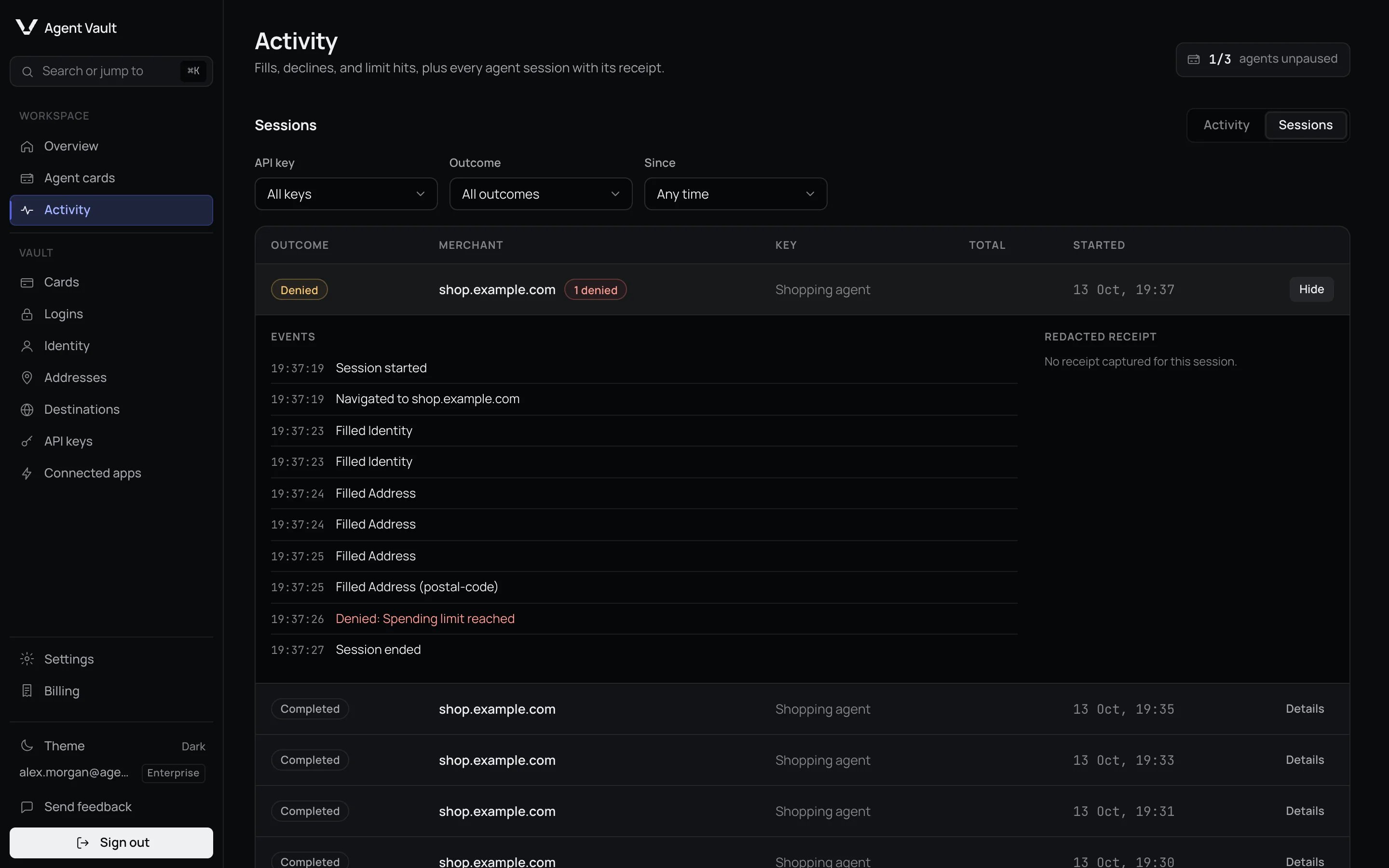
The Sessions tab with one session expanded.
1
Click Sessions
Each row shows the Outcome, the Merchant site, the Key, the
Total and when it Started.
2
Narrow the list
Use the outcome, time and key filters at the top. The defaults are All
outcomes, Any time and All keys.
3
Click Details on a row
The session’s events appear in order, with its Redacted receipt if one
was kept. Click Hide to close it.
Inside a session, Filled names the kind of detail, such as Card number,
and the form field, never the value. Navigated to shows only the site name.
Why a fill was refused
A Denied event in a session, and a Declined entry in the feed, name the reason in plain words. Your agent only gets a short code, so this page is the only place the full reason is shown.

A declined fill and its reason.
Did the order actually go through?
Did the order actually go through?
Look for Filled Card number first: if it is there, the number reached the
merchant’s form. If it is missing, that does not prove the number was not
filled, because recording is best effort. For an MCP session, Confirmed is good evidence of success, because the MCP
server checks the page before recording it. For an SDK session it is only the
agent’s own
recordOutcome() call, which checks nothing, so treat it as the
agent’s claim. Its absence does not prove the order failed.
For a definite answer, check the merchant’s emailed receipt.Spend is fill intent
Overview and agent cards count only fills on a funding card an agent card controlled at the time. A fill on a card marked No limits shows here as Card entered and is left out of those totals.Receipts
A session can keep a redacted screenshot of the merchant’s confirmation page. Most checkouts show No receipt captured for this session, and that is expected: a receipt is kept only when Agent Vault filled no saved detail in the session. A one-click checkout with a card already saved at the merchant can get one, but capture is best effort: a screenshot that fails, an image too large to store, or a failed save leaves the session with no receipt.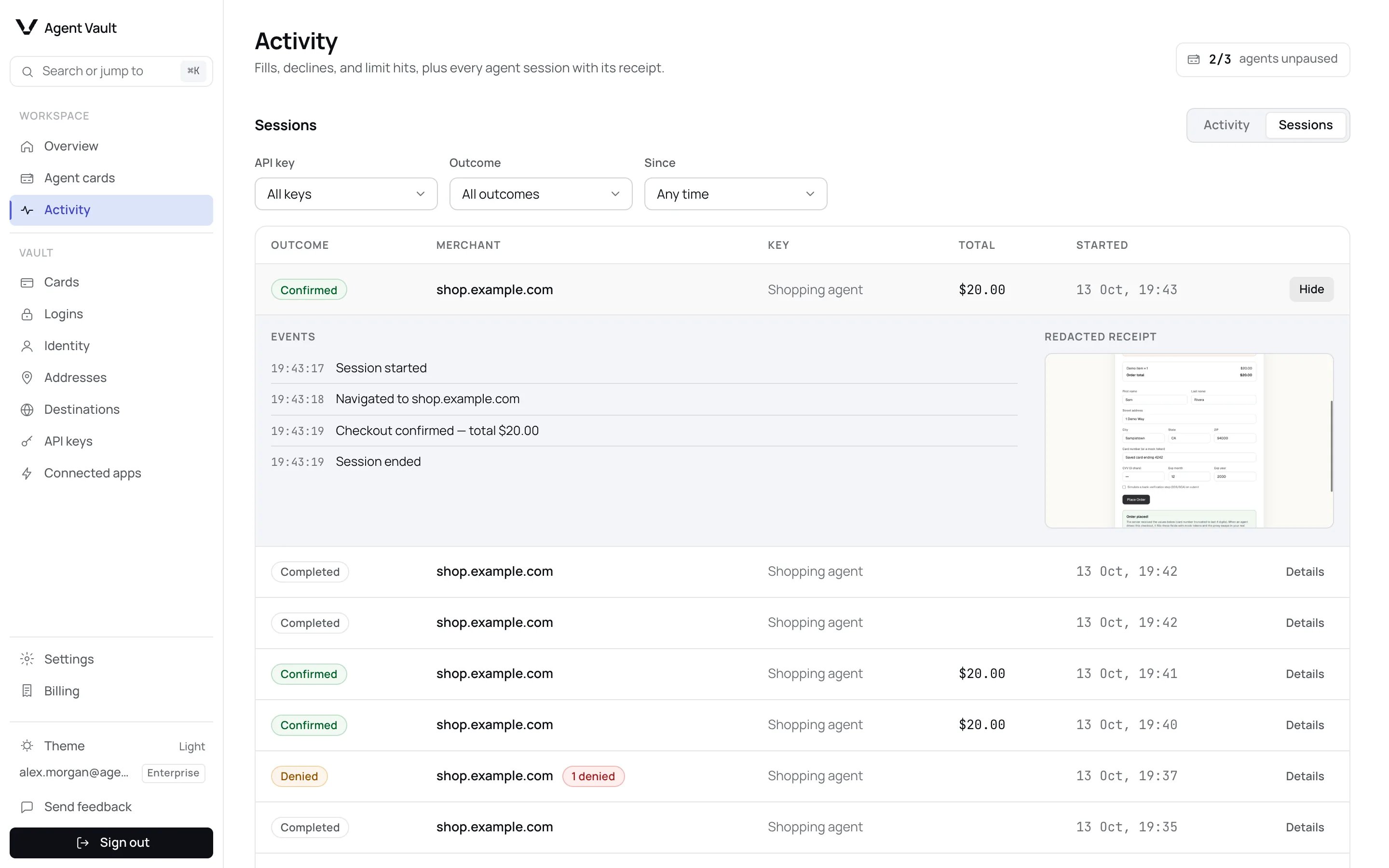
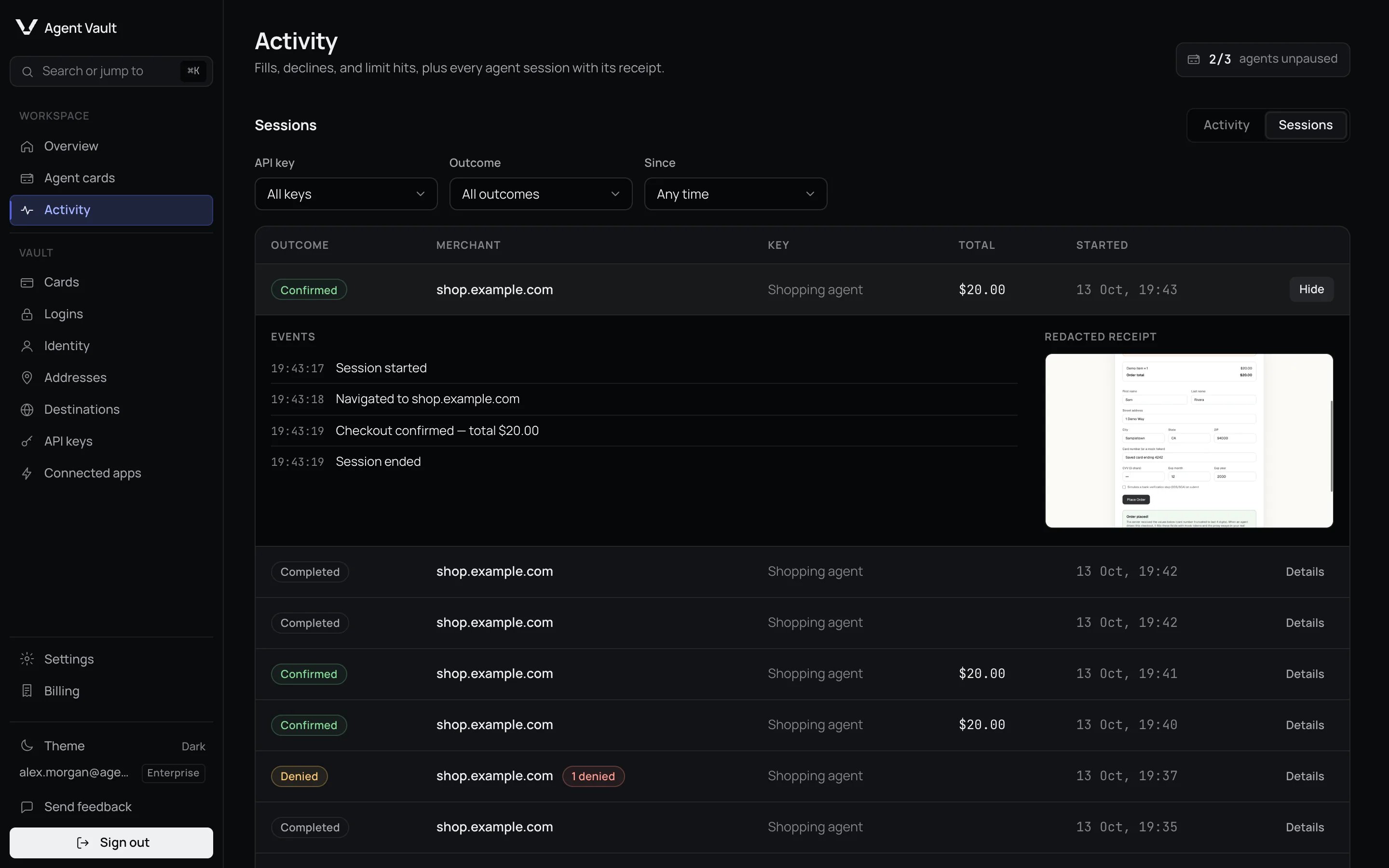
A session with a redacted receipt.
Why is there no receipt after my agent filled a card?
Why is there no receipt after my agent filled a card?
Confirmation pages often repeat your email or delivery address as plain text,
where redaction cannot reliably cover it. Rather than risk storing that, Agent
Vault keeps no screenshot at all once any saved detail was filled in the session.
A receipt that is kept shows only what the merchant chose to display, such as
“card ending 1111”.
How long sessions are kept
Sessions, their events and receipts are kept for 30 days from the session start, on every plan, then removed automatically. A running session is never removed, and sessions end after 60 minutes at most. Deleting your account erases the whole record in the background, without waiting for the 30 days. See Data and deletion.For developers
Next: Approvals and notifications to choose which of these events reach you.